Some recipes are more than food. They’re memories, voices, hands working together, and that feeling of home you carry with you long after you’ve left.
For me, Mpiulato is exactly that.
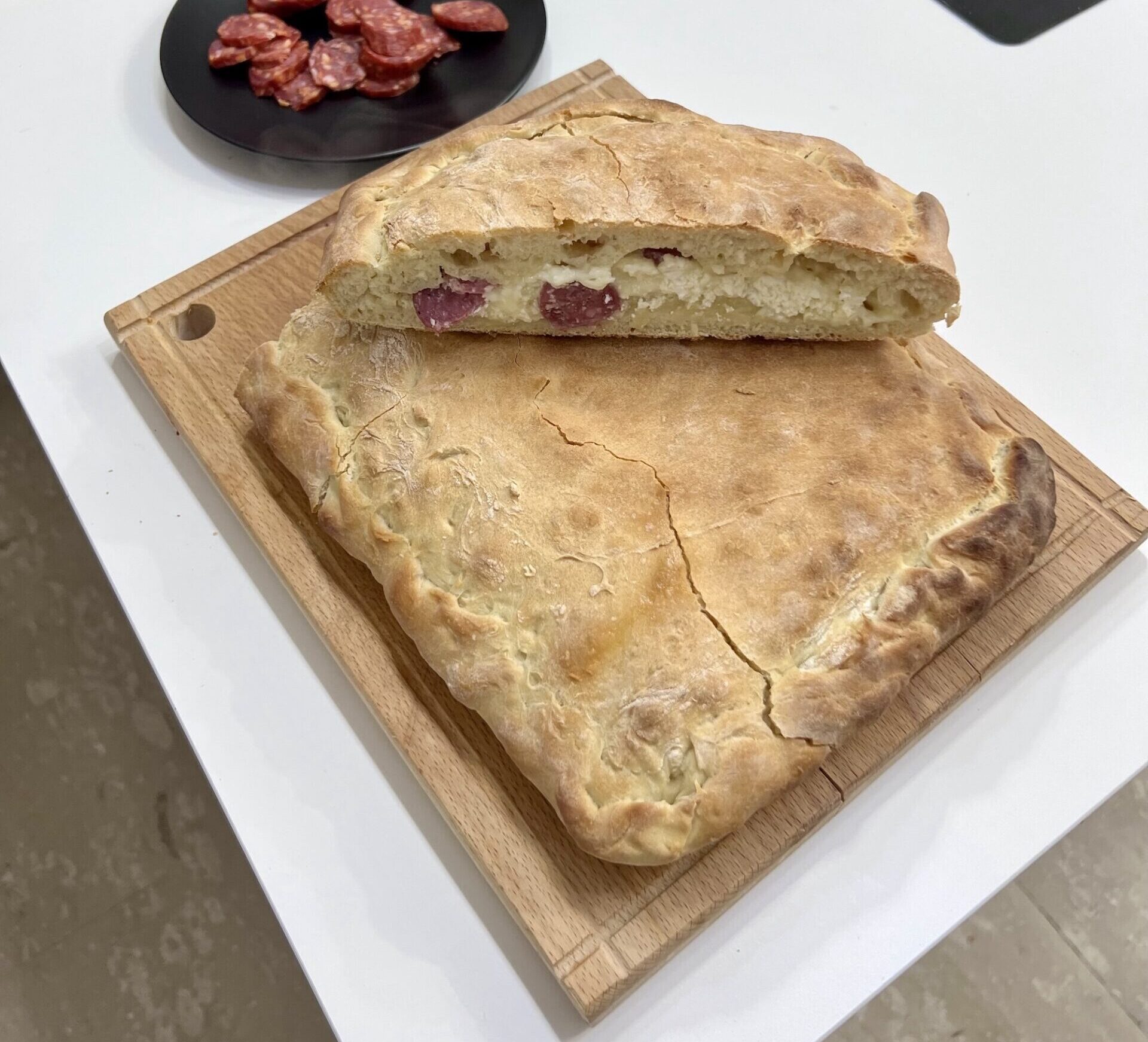
I come from Paola, a town in Calabria, in the south of Italy, and Mpiulato is one of those breads that almost everyone knows—maybe by a different name, or with a slightly different filling. In some towns it’s called pitta, in others something else entirely. What never changes is the spirit behind it: a simple bread dough, generously filled, baked for sharing.
Traditionally, Mpiulato is made for Easter. And when I say “made,” I don’t mean quickly thrown together in one kitchen. The time it takes, the slow process, the waiting… this is all part of the tradition too.
When the neighbourhood smelled like bread
One of my clearest childhood memories is the days leading up to Easter.
In my old neighbourhood, grandmothers and mothers would gather together, each bringing something: dough, filling, trays, stories. There was flour everywhere, aprons dusted white, hands moving with the confidence that only years of repetition can give – and yes, plenty of chit-chat and gossip too. 😀
The ovens would go on and off all day, and once the breads were baked, they didn’t always stay at home. Mpiulato was meant to be shared – given to family members, neighbours, friends. A piece of bread as a way of saying: I thought of you.
That’s the kind of tradition I grew up with: warm, generous, and very human.
One bread, many versions
Across Calabria, Mpiulato changes from place to place, in both name and filling. And that’s exactly what I love about it. There is no single “correct” recipe. Mpiulato adapts. It reflects what people had available, what they liked, what they wanted to celebrate.
And maybe that’s why it has survived for generations.
Ingredients & Paola version
At its core, Mpiulato is made from very simple ingredients: flour, eggs, yeast, and water. A humble dough, enriched by time and patience. What really makes the difference, though, is the filling, and this is where every town, and every family, leaves its mark.
The version we make in Paola is filled with provola cheese and salsiccia, both deeply rooted in our local food culture. And if I’m being honest, the taste of salsiccia is the strongest “home feeling” I know. One bite is enough to take me straight back – no matter where I am. It’s bold, comforting, and unmistakably Calabrian.
Why wait only once a year?
This January, while I was visiting my family, my sister made an Mpiulato.
Not for Easter. Not for a special occasion. Just because she felt like it.
And honestly? It tasted just as good – maybe even better – because it came with that unexpected joy of not waiting.
Don’t get me wrong: I love traditions. I truly do. I believe they matter, and I try to keep them alive.
But if something is so good, so comforting, so deeply tied to who we are… why should we allow ourselves to enjoy it only once a year?
Food traditions were born to bring people together. And that can happen in January just as well as in April.
Keeping traditions alive, in our own way
Making Mpiulato today might look different from how it was done years ago. Maybe it’s one person in the kitchen instead of a whole neighbourhood. Maybe it’s baked in a modern oven and shared with fewer people.
But the heart of it is still there.
Every time I make, or eat, Mpiulato, I’m back in those streets: smelling bread in the air, hearing familiar voices, feeling rooted. And that’s something I never want to lose.
So whether you make it for Easter, on a quiet winter weekend, or simply because you’re craving something comforting: make it, share it, and make it part of your story too.
Because traditions don’t disappear when we adapt them.
They stay alive when we keep baking them.


Leave a Reply